In the modern era, we have become accustomed to near-ubiquitous connectivity. We rely on fiber-optic cables buried beneath our streets and cellular towers dotting our horizons to keep us linked to the global information grid. However, this reliance creates a dangerous illusion of permanence. When a natural disaster—be it an earthquake, flood, or hurricane—strikes, these very systems are frequently the first to collapse.
The failure of terrestrial networks during a crisis is not merely a technical inconvenience; it is a critical bottleneck that can cost lives. Emergency responders, humanitarian organizations, and government agencies depend on real-time data to coordinate rescue efforts and allocate resources. When the grid goes dark, the flow of information stops, leaving teams operating in a vacuum at the most critical moment.
Physical Infrastructure Vulnerability
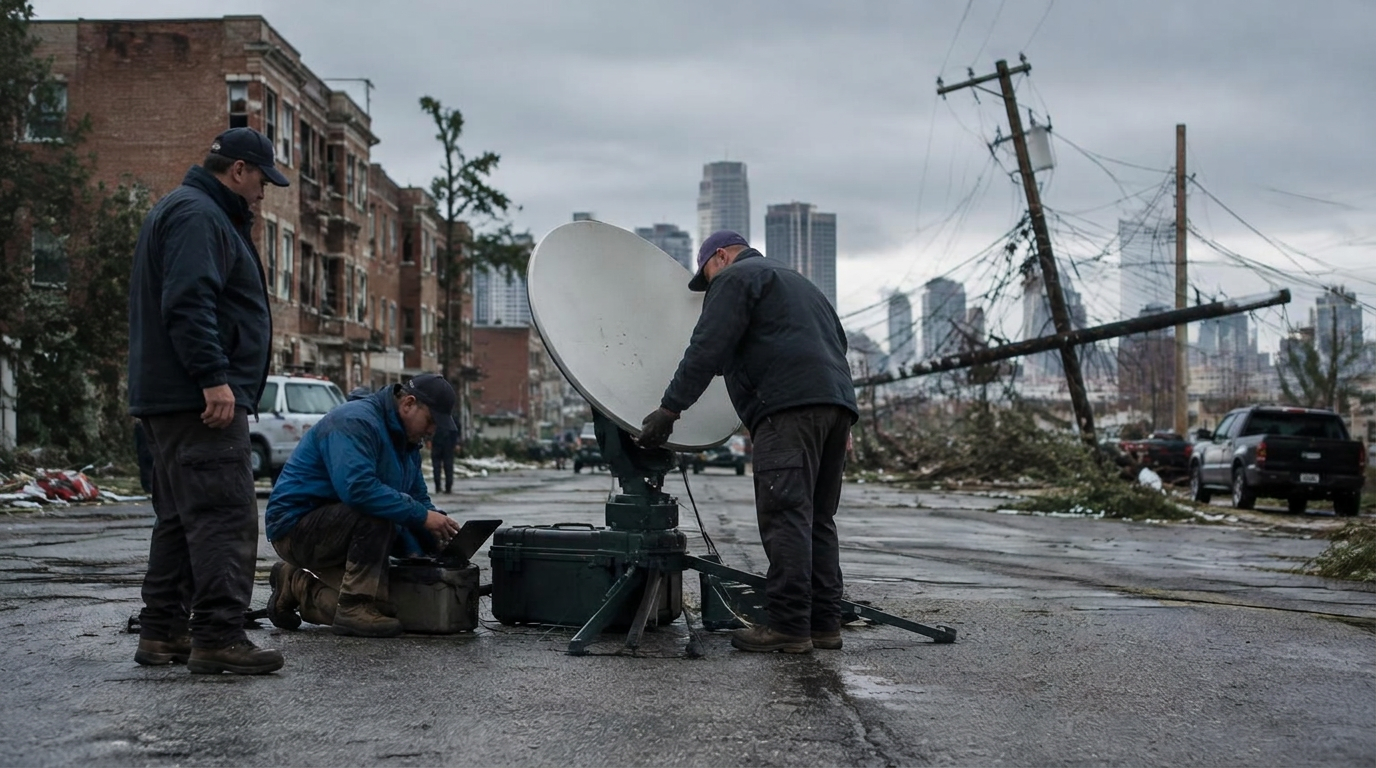
Terrestrial networks are, by definition, tethered to the ground. This physical presence is their greatest weakness during a disaster. Cellular towers are susceptible to high winds, which can topple structures or misalign directional antennas. Fiber-optic cables, often buried shallowly or strung along utility poles, are easily severed by shifting soil, falling trees, or construction equipment during debris removal.
Even if the towers themselves remain standing, the ground-based "backhaul" infrastructure—the cables that connect the tower to the core network—is often damaged. Without this link, a mobile phone may show a signal, but no data or calls can pass through. This "zombie network" state creates confusion for both survivors and responders.
Environmental Impact on Hardware
Extreme temperatures and moisture are silent killers of networking equipment. Flooding can submerge base stations, causing short circuits in sensitive electronics that are not rated for immersion. In many cases, the damage is not immediate but manifests as corrosion that leads to intermittent failures days after the initial event.
Furthermore, salt spray in coastal regions following a hurricane can accelerate the degradation of exposed connectors and cooling systems, leading to overheating and hardware failure even if the primary structure survived the wind.
Network Congestion and Logical Bottlenecks
If a network manages to survive the physical impact of a disaster, it immediately faces a second challenge: overwhelming demand. During an emergency, the volume of call and data attempts spikes exponentially. Everyone in the affected area simultaneously tries to contact loved ones, check news, or call for help.
Terrestrial networks are designed for average peak loads, not for 1,000% increases in traffic. The resulting congestion causes "blocking," where the network simply refuses new connections. For emergency teams, this means that even if their devices are functional, they cannot get a dial tone or transmit a GPS coordinate.
The Power Dependency and Cascading Failures
Communications equipment requires electricity. While most cellular sites have battery backups, these are typically designed to last only 4 to 8 hours—enough to cover short outages but insufficient for major disasters where the power grid may be down for weeks. Once the batteries drain, the site goes dark.
Generators are a common secondary backup, but they rely on a supply chain for fuel. In a disaster zone, roads may be blocked or fuel supplies may be rationed for medical facilities. If a technician cannot reach a remote tower to refuel a generator, the network remains offline despite the equipment being otherwise functional.
Interdependence of Services
The modern world is a web of interdependencies. The telecommunications sector relies on the energy sector, which in turn relies on logistics. A failure in one often triggers a cascade. For instance, a water main break can flood a basement containing critical routing equipment, which then knocks out communications for an entire district.
Understanding these links is vital for disaster planning. A strategy that only addresses hardware without considering power and logistics is doomed to fail when the environment becomes hostile.
The Satellite Advantage: Decoupling from the Ground
Satellite communications (SATCOM) offer a fundamental advantage because the primary infrastructure—the satellite itself—is located hundreds or thousands of kilometers above the disaster zone. It is immune to earthquakes, floods, and atmospheric turbulence. As long as a user has a clear view of the sky and a power source, they can connect.
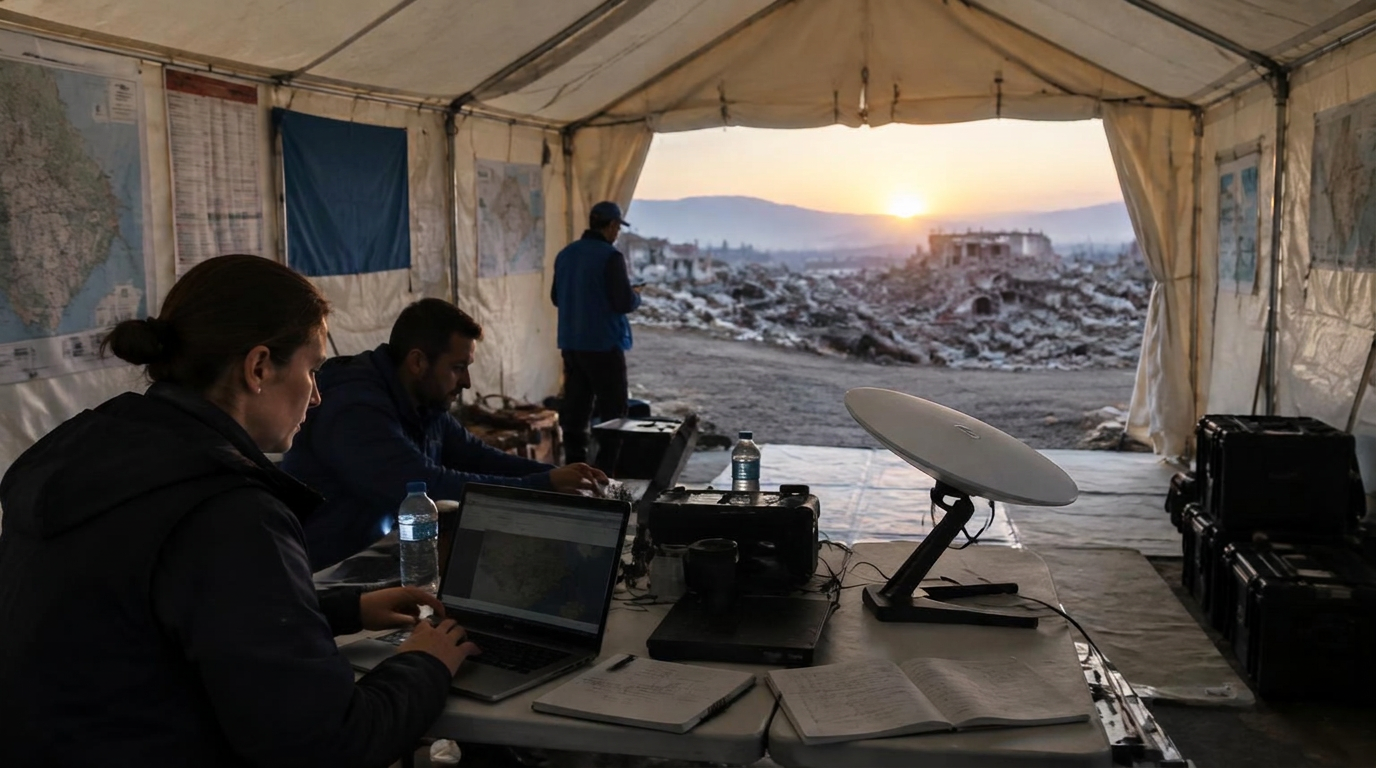
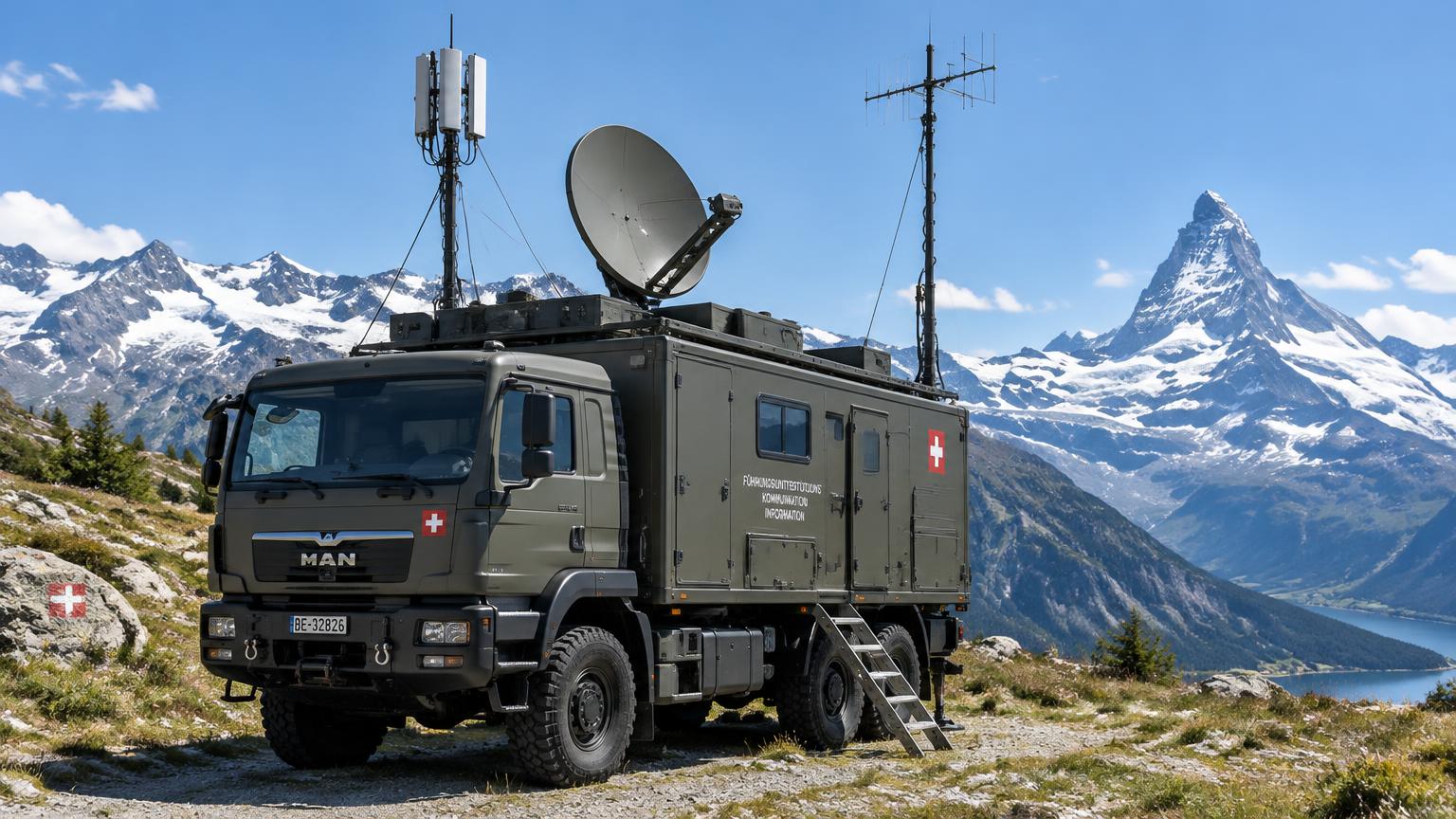
This decoupling from local infrastructure makes satellite the only reliable choice for the "first-in" teams. When responders arrive at a scene where terrestrial networks have vanished, satellite terminals provide an immediate bridge back to the global network, enabling the establishment of command centers within minutes.
Building Hybrid Connectivity Strategies
The most resilient organizations do not rely on a single technology. Instead, they employ hybrid strategies that integrate terrestrial and satellite assets. By using terrestrial networks as a primary path and automatically failing over to satellite when the ground link is lost, organizations can ensure continuous operations.
Advancements in technology have made this integration seamless. Modern "smart" routers can detect network degradation and switch traffic between LTE, fiber, and satellite without user intervention, ensuring that critical data always finds a path.
Conclusion
In conclusion, the fragility of terrestrial networks is a reality that every organization must face. Relying solely on the ground-based grid in a disaster is a risk that can no longer be justified given the availability of modern alternatives. Planning for failure is not an admission of weakness, but a hallmark of operational excellence.
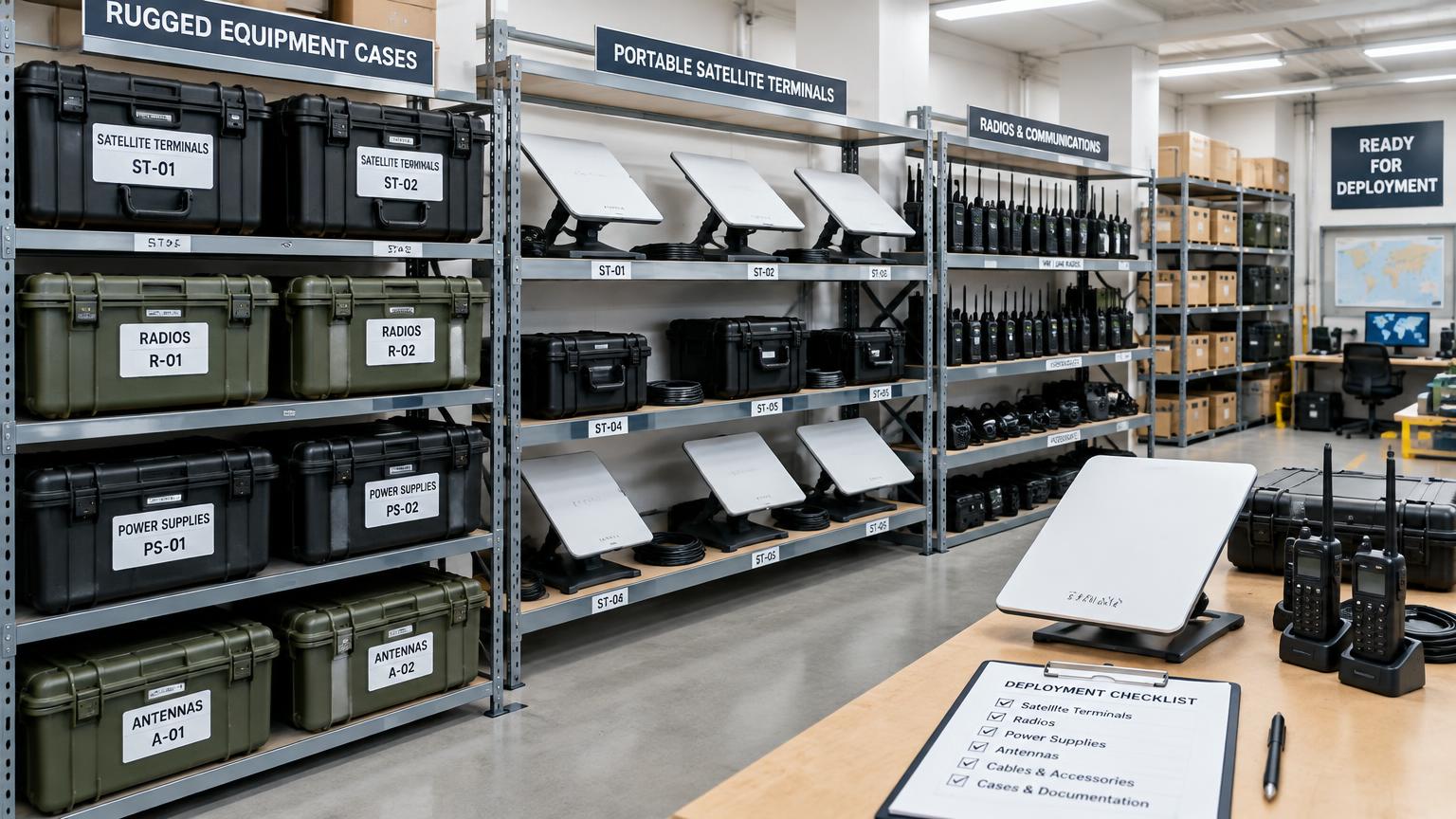
At LEVIN'S SWISSLOGISTICS International, we specialize in bridging these gaps. Our integrated satellite solutions and emergency deployment kits are designed to ensure that no matter how severe the disaster, your team remains connected, informed, and capable of fulfilling its mission.