Satellite communications are undergoing a significant transformation. For decades, Geostationary (GEO) satellites—positioned 35,786 kilometers above the equator—dominated the industry. Today, Low Earth Orbit (LEO) constellations, comprising thousands of satellites just a few hundred kilometers up, are challenging the status quo.
Choosing the right technology depends on which is "fit for purpose" for a specific mission. Each orbit offers unique physics-based advantages in latency, bandwidth, reliability, and equipment cost. This article provides a strategic framework to help decision-makers in logistics and emergency response evaluate these technologies.
Understanding these technical differences is not merely an academic exercise; it is the cornerstone of designing resilient networks that survive in the most demanding environments.
The Physics of Orbits
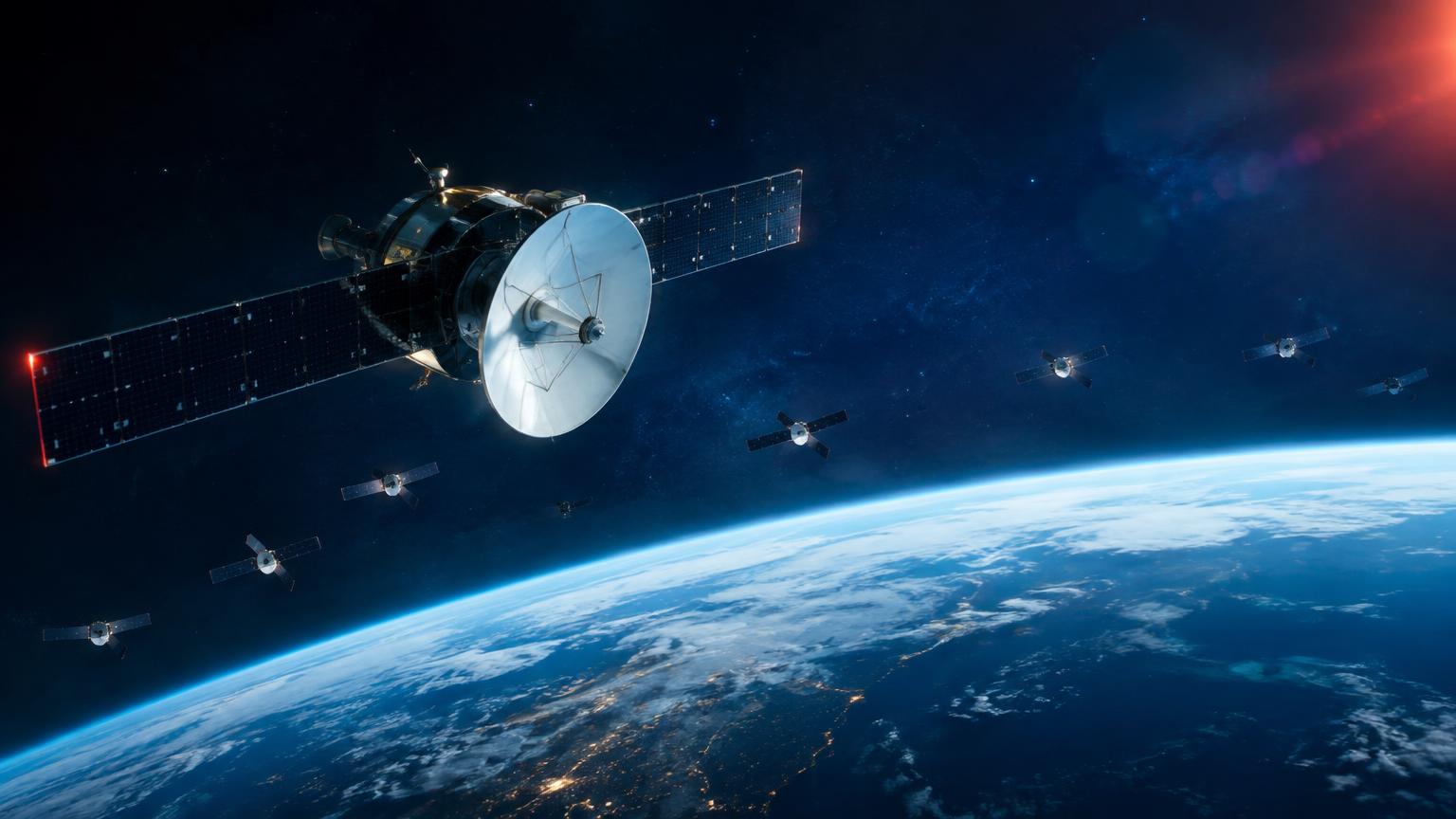
The fundamental difference between GEO and LEO is altitude. GEO satellites match the Earth's rotation, remaining fixed over one spot. This makes them stationary targets in the sky, allowing fixed dishes to be pointed once and left. In contrast, LEO satellites orbit between 500 and 2,000 kilometers.
At this height, LEO satellites travel at 27,000 km/h, passing from horizon to horizon in minutes. Continuous service requires a constellation of hundreds or thousands of satellites, with ground terminals handing off connections as they pass overhead. This proximity significantly reduces the travel time for signals, providing a responsiveness that GEO satellites simply cannot match by law of physics.
Latency vs. Stability: The Speed Trade-off
Latency is the most discussed metric. Light's finite speed means the 72,000 km round trip to a GEO satellite introduces a delay of 500 to 700 milliseconds, noticeable in voice and high-frequency protocols. LEO satellites offer latencies as low as 25 to 50 milliseconds, comparable to terrestrial fiber-optic networks.
LEO is ideal for real-time applications like video conferencing and cloud software. However, GEO is often more stable. A GEO link is a static connection to one satellite, whereas LEO requires constant handovers that can introduce "jitter." For steady telemetry or large file transfers, the mature technology of GEO remains a reliable workhorse. Decision-makers must balance the immediate speed of LEO against the proven consistency of GEO.
The Impact of Jitter on Data Integrity
While high latency is predictable, jitter (variance in latency) caused by rapid LEO handovers can affect certain sensitive protocols. Modern LEO hardware has largely mitigated this, but for legacy systems, a dedicated GEO link may still provide a cleaner data stream.
Global Coverage and Network Density
GEO satellites have massive footprints; just three can cover almost the entire planet, excluding the poles. However, signal quality degrades at extreme latitudes. LEO constellations provide true global coverage, including the North and South Poles, and can handle higher capacity by spreading load across multiple satellites.
LEO performance can be affected by line-of-sight issues; if terrain blocks the view, fast-moving satellites may be lost more easily than a fixed GEO satellite. Deployment choice thus depends on geographic location and the physical environment of the operation site.
Equipment and Deployment Factors
GEO terminals use simple, static dishes but often require large diameters. Mobile applications need complex motorized auto-pointing systems. LEO terminals typically use Electronically Steered Antennas (ESA) with no moving parts. These track multiple satellites simultaneously and are generally easier to set up.
However, LEO terminals currently consume more power than GEO counterparts due to rapid tracking requirements. In remote sites where power is scarce, the energy efficiency of GEO might outweigh LEO's latency benefits. Strategic selection must account for these logistical constraints alongside performance needs.
Sustainability and Power Logistics
For long-term field operations, the power footprint of communication gear is a critical logistical bottleneck. Choosing a lower-power GEO terminal might reduce the need for larger battery arrays and solar fields, simplifying the entire logistical chain.
Strategic Selection: Making the Right Choice
There is no "one size fits all" solution. A disaster response team using cloud tools benefits from LEO's low latency. A remote weather station transmitting small bursts of data may find GEO more cost-effective. Many organizations now adopt "multi-orbit" strategies for maximum reliability.
By deploying hardware that accesses both LEO and GEO networks, they gain LEO's speed for daily operations and GEO's stability as failover. This hybrid approach represents the peak of modern communication resilience.
Conclusion
The choice between GEO and LEO must be driven by specific mission requirements. The satellite industry is no longer a monopoly of distance, and competition between orbits is driving innovation that benefits all field users.
LEVIN'S SWISSLOGISTICS International provides hardware-agnostic consulting and integrated solutions leveraging both GEO and LEO constellations. We ensure your mission has the right link at the right time, anywhere on Earth.